Marta Chudy
Born in Poznań in 1997, she is a visual artist, graphic designer and craft practitioner whose work bridges traditional media and contemporary visual culture.
Between 2017 and 2022 she studied at the Faculty of Graphic Design and Visual Communication at the Magdalena Abakanowicz University of the Arts Poznań, graduating with distinction in graphic techniques from the Graphic Arts Studio I – Relief Printing. In 2022 she received an award for the Best Diploma – Graphics. Student and Supervisor programme organized by International Print Triennial Society in Kraków.
Since 2022 she has been an assistant in Graphic Arts Studio II – Flat Printing – Digital Graphics | Serigraphy at her alma mater. Her artistic research and practice encompass screen printing, relief printing, textile art and painting, exploring the dialogue between traditional methods and contemporary visual languages. Her work constructs layered narrative landscapes drawn from memory, experience and perceptual resonance, weaving together printmaking and photography into contemplative, evocative forms.
In addition to her studio practice, she curates cultural projects, coordinates exhibitions and leads workshops for audiences of all ages.
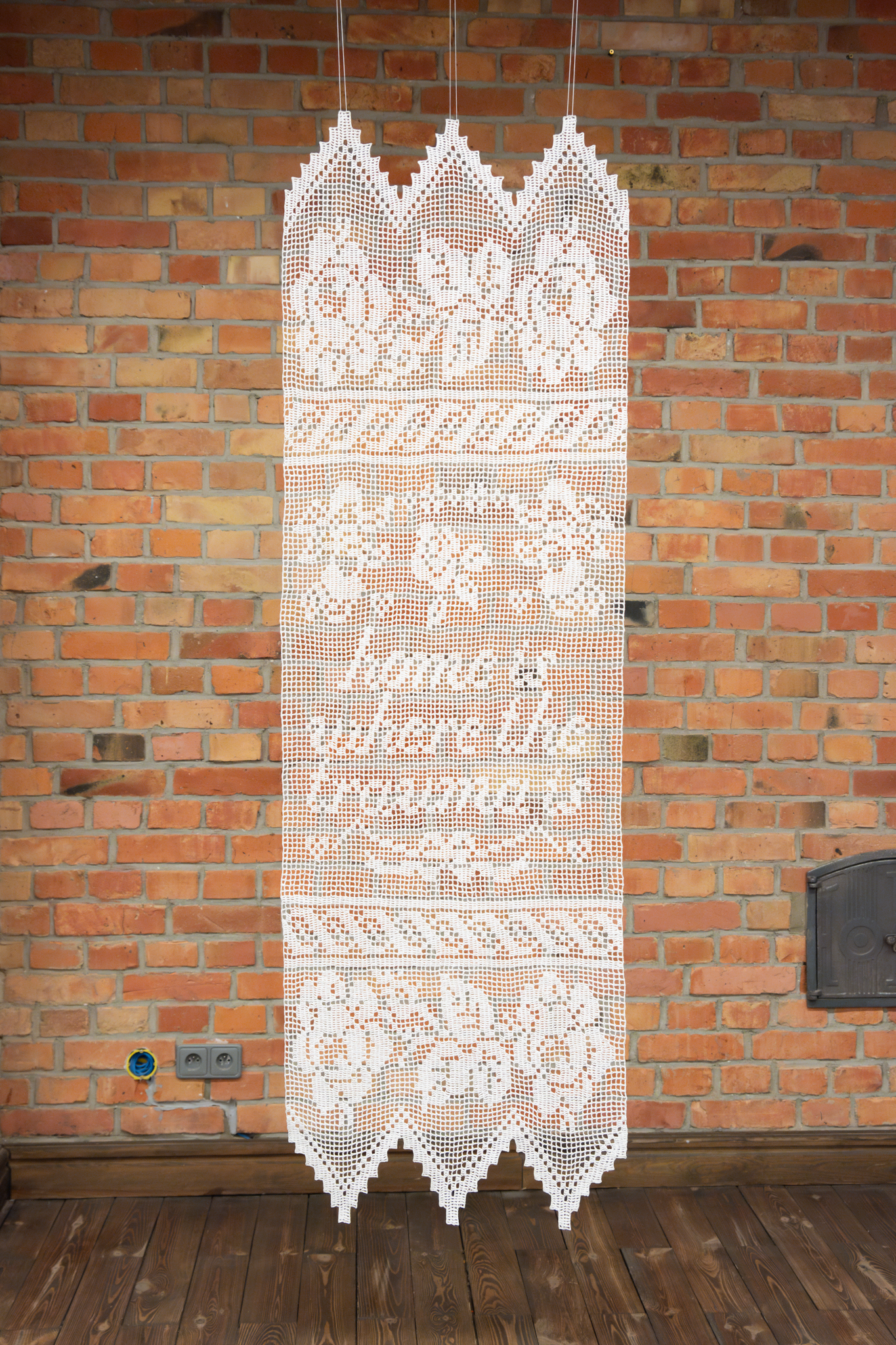
Home Sweet Home (2025)
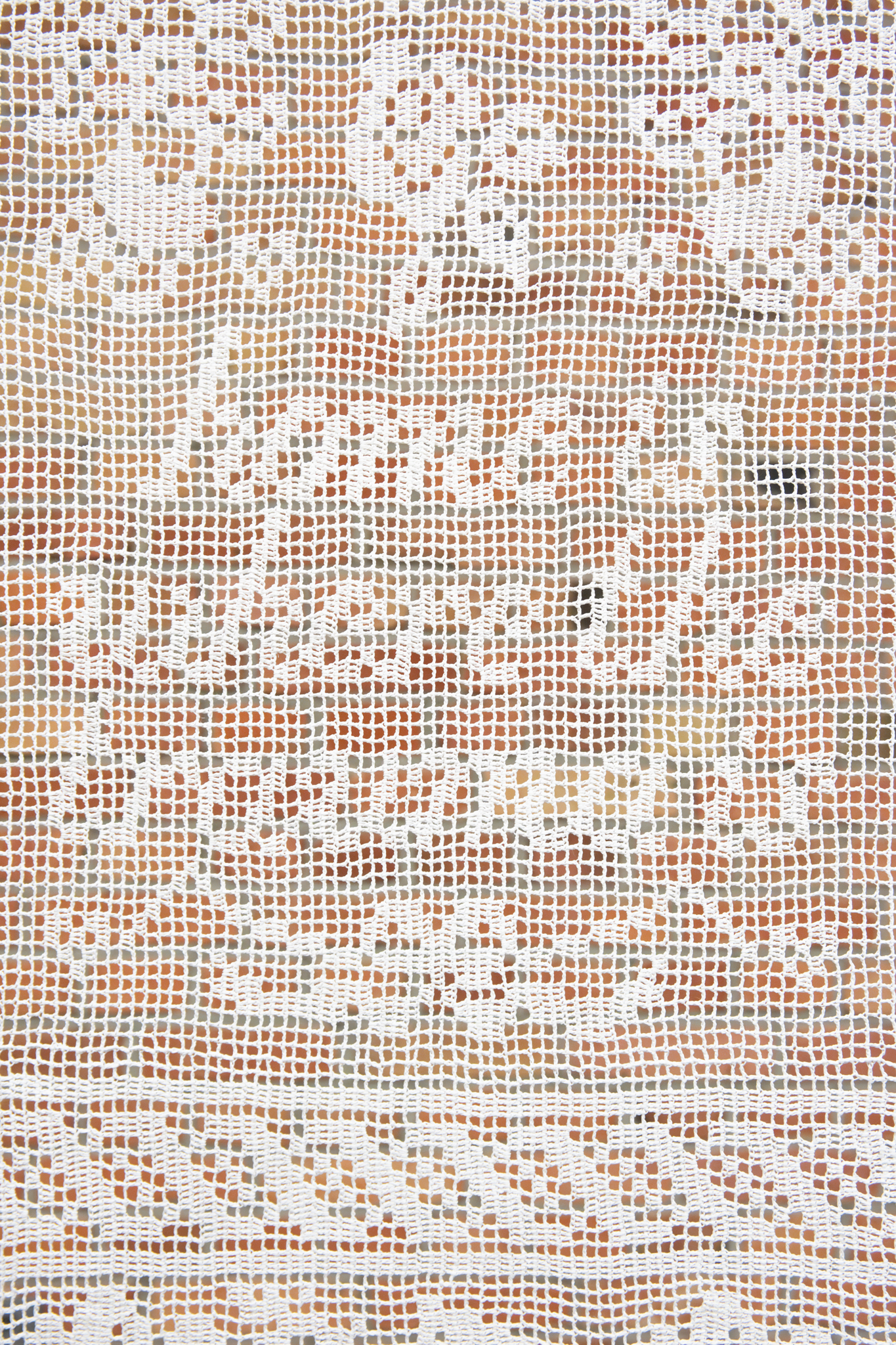
Technique: object, filet crochet
Dimensions: 60×197 cm
Year: 2025
The work was first presented as part of the Group 404 collective exhibition “Postcard from the Province” at the BWA Gallery in Zielona Góra.
It received a jury’s distinction at the 5th Biennal of Textile Art in Poznań, at the main exhibition “Journey to Invisibility,” which featured 30 works selected from 623 submissions from around the world.
The Polish word “zazdrostka” is a diminutive derived from the noun “zazdrość” [jealousy]. Traditionally made of delicate natural cotton and associated with warmth and coziness, such a curtain – hung halfway up a window – was intended to protect the interior from prying or unfriendly gazes from outside.
The presented work engages with this familiar form, transforming it in both scale and meaning. The small curtain is expanded into a full-length drape that completely covers the window, assuming a dominant role in organizing the interior space. As a result, the object’s original function is shifted, revealing a tension between protection and isolation.
Home Sweet Home, with its ironic slogan “Home is where the trauma is,” suggests that domestic space is not a neutral environment. What is traditionally perceived as a “tender” decoration becomes a critical gesture, challenging the romanticized vision of the home as a safe haven and exposing its potentially oppressive nature. The work reveals internal tensions, dismantling the mythologized image of the home and the role assigned to women as caregivers, craftswomen, and guardians of the hearth. Traditional handicraft – long undervalued and associated with the female private sphere—is here transformed into a tool of resistance. Through a familiar and seemingly innocent aesthetic, the work communicates the unspoken: that the home can be a site of trauma, and that caring for it may stem from social pressure.