Maciej Kurak
Since 2009, he has led the Graphic Arts Studio at the Magdalena Abakanowicz University of the Arts Poznań. He received the main award funded by Deutsche Bank in the Spojrzenia competition, organised by Zachęta – National Gallery of Art in Warsaw, as well as the Polityka Passport award. He is a member of the Wunderteam collective, Group 404, and the Galeria Niewielka project. For many years, he has carried out artistic activities in both private and public space and has realised numerous artistic projects in Poland and abroad. He has curated and organised many exhibitions and artistic initiatives. He is the initiator and co-author of the graphic research project Bunt. New Expressions, devoted to the legacy of the avant-garde group Bunt, and the author of numerous texts and studies on art.
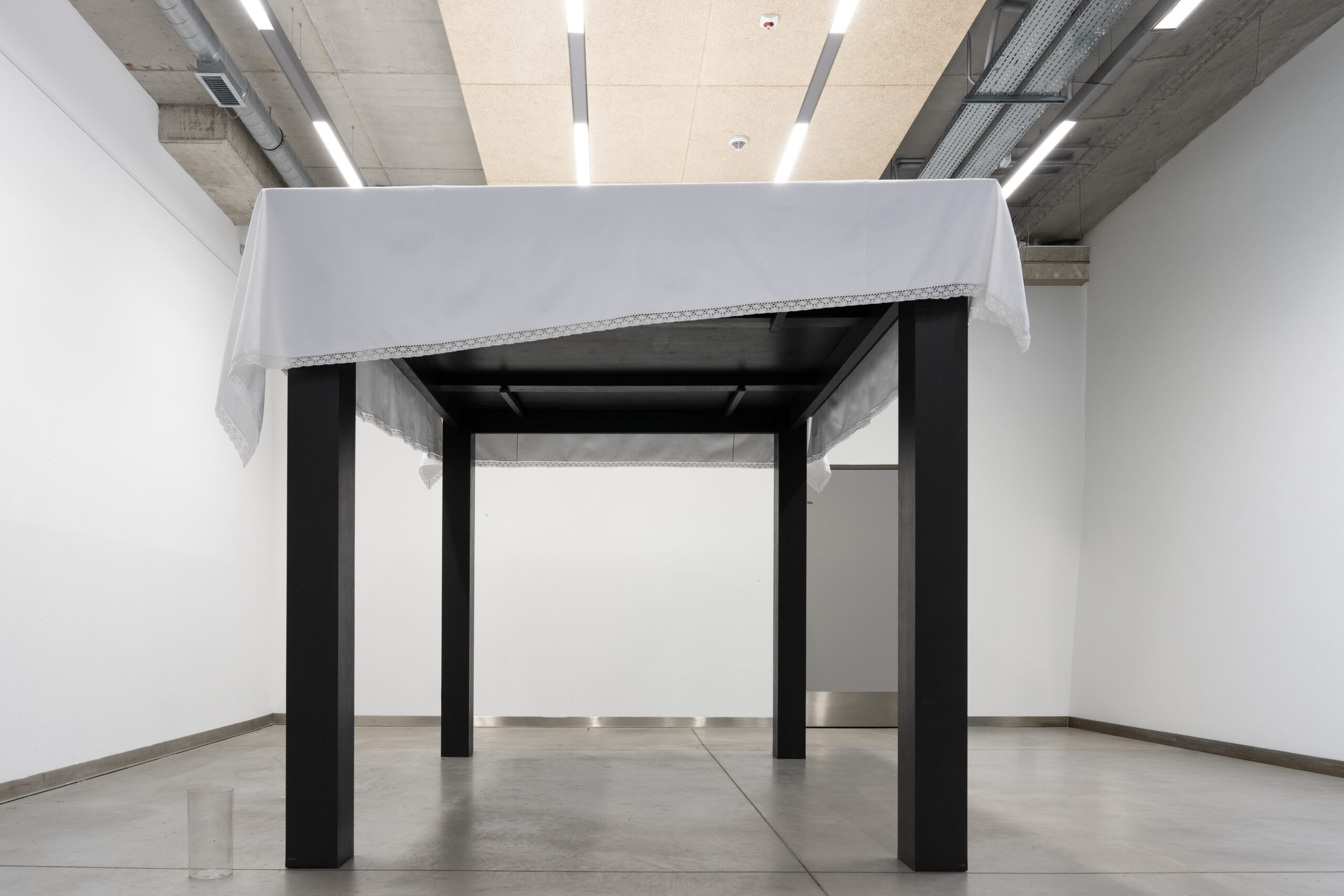
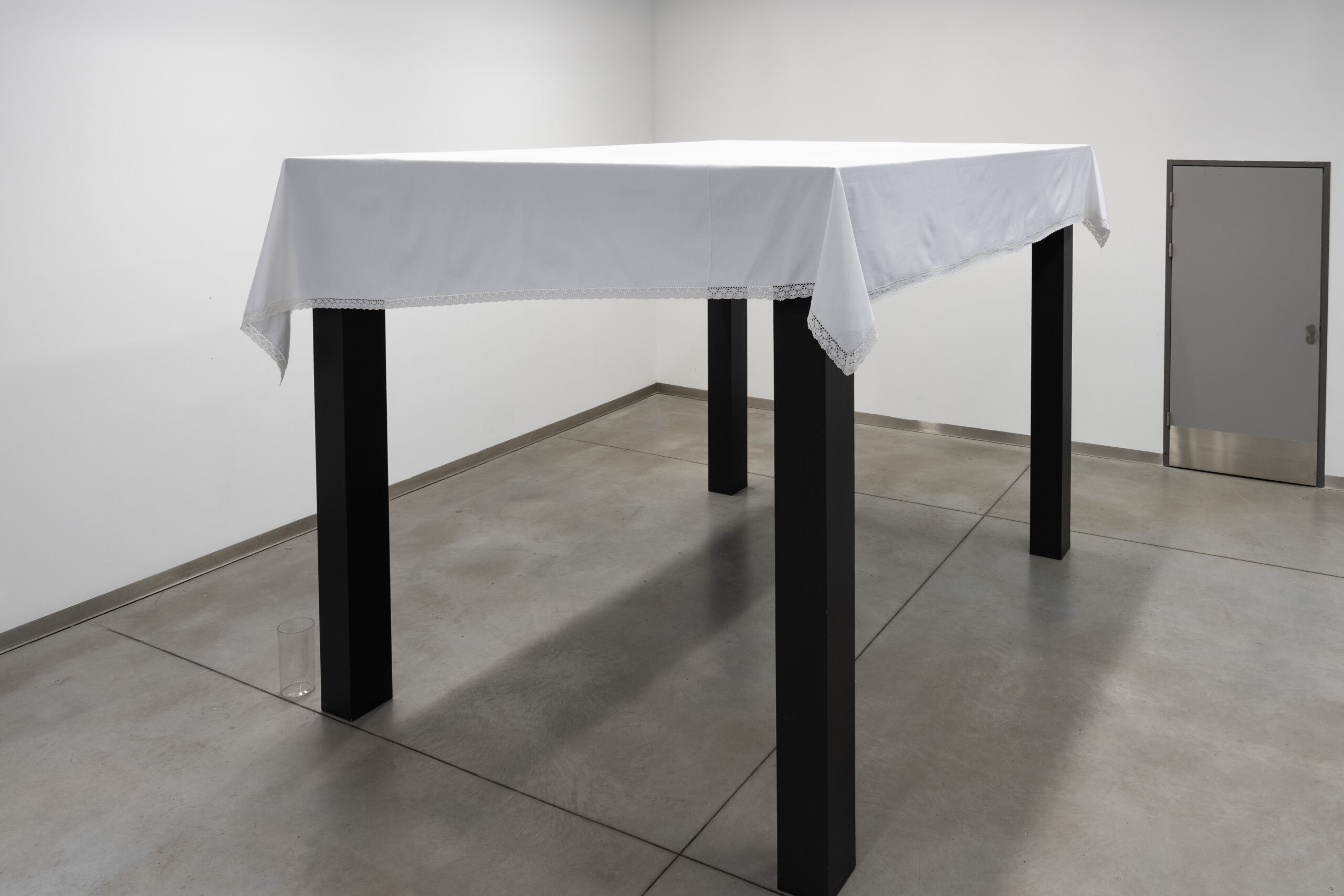
The Luncheon on the Grass (2026)
Year: 2026
Venue: Siennica Różana, presented as part of the LandArt Festival Water
Dimensions: 2.5 × 3.5 × 2.4 m
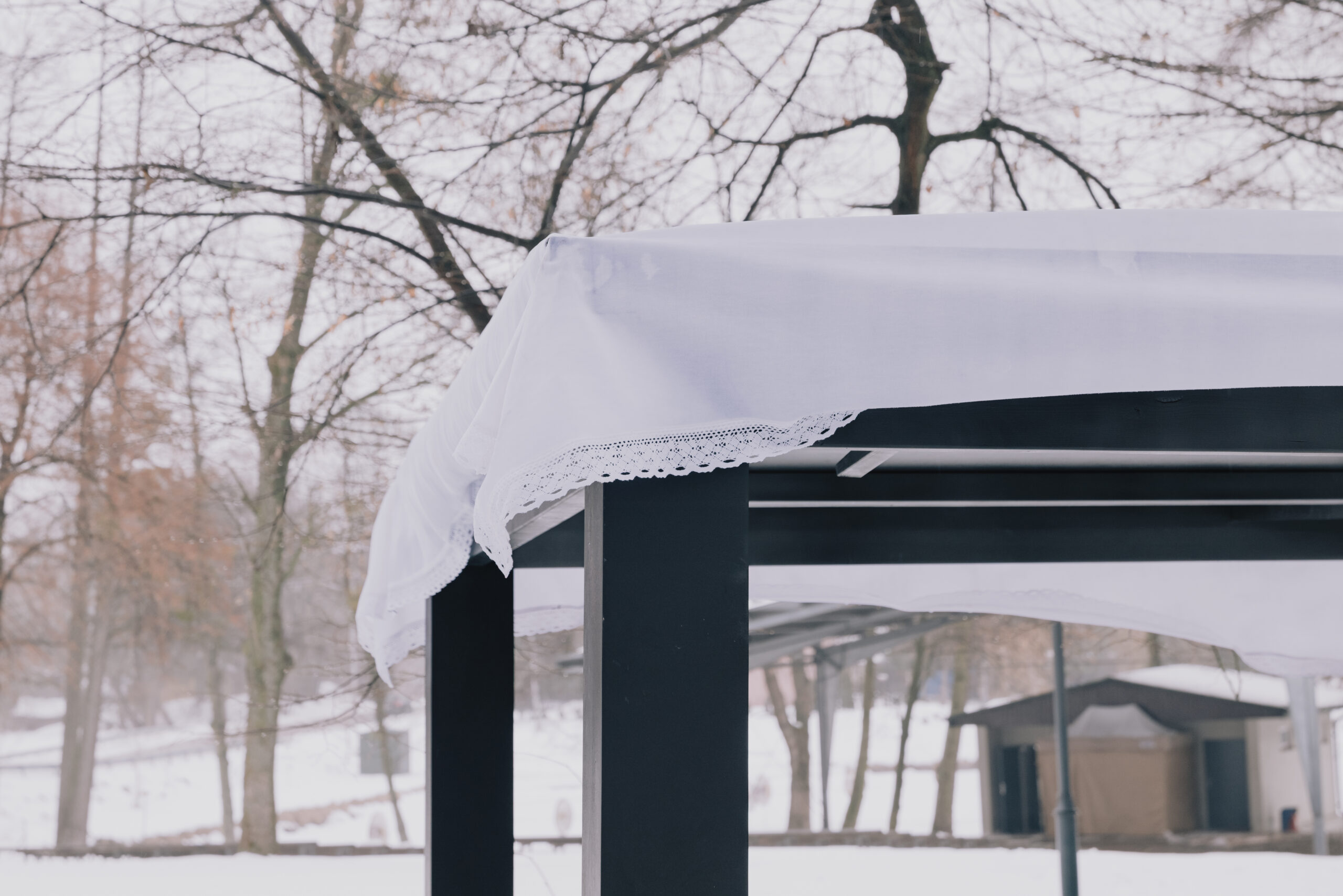
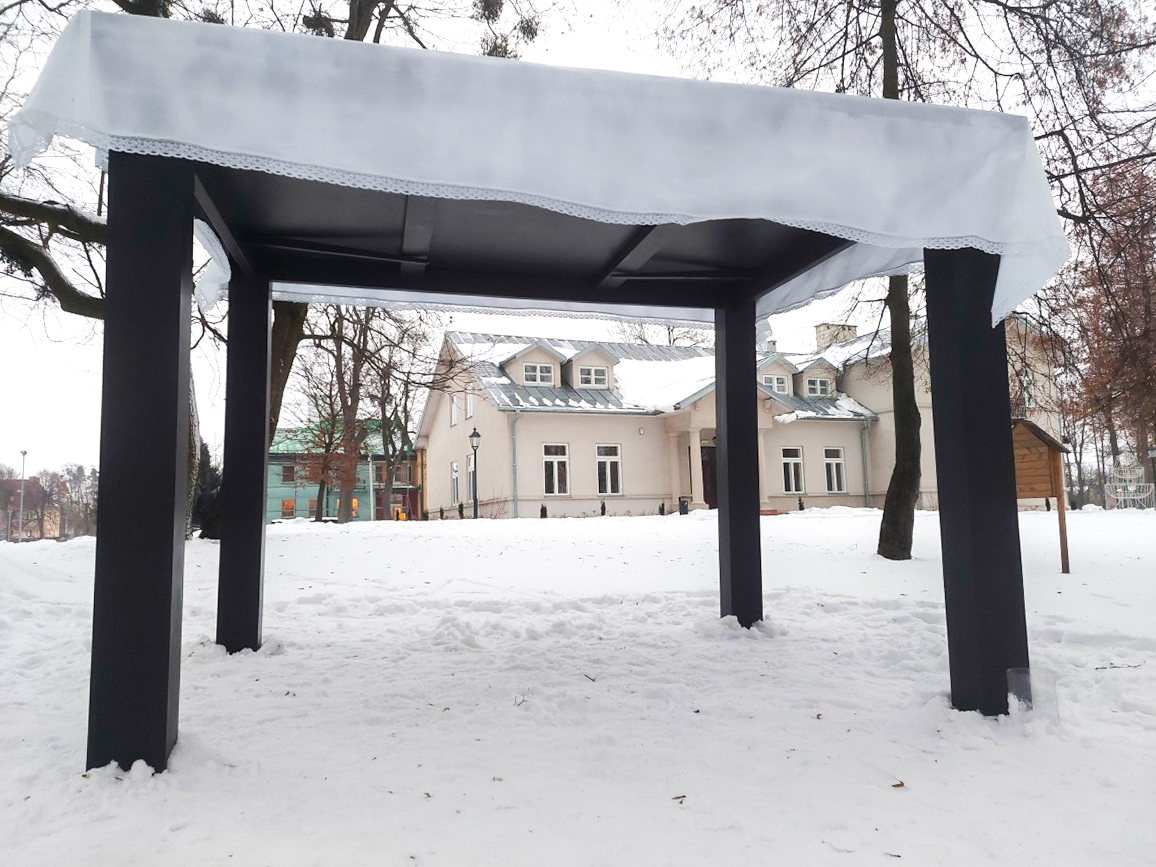
The intervention consisted of two elements: an enlarged wooden table with a slightly inclined tabletop, designed to allow water to drip into a glass container positioned at one of its corners. The table was covered with an impregnated tablecloth.
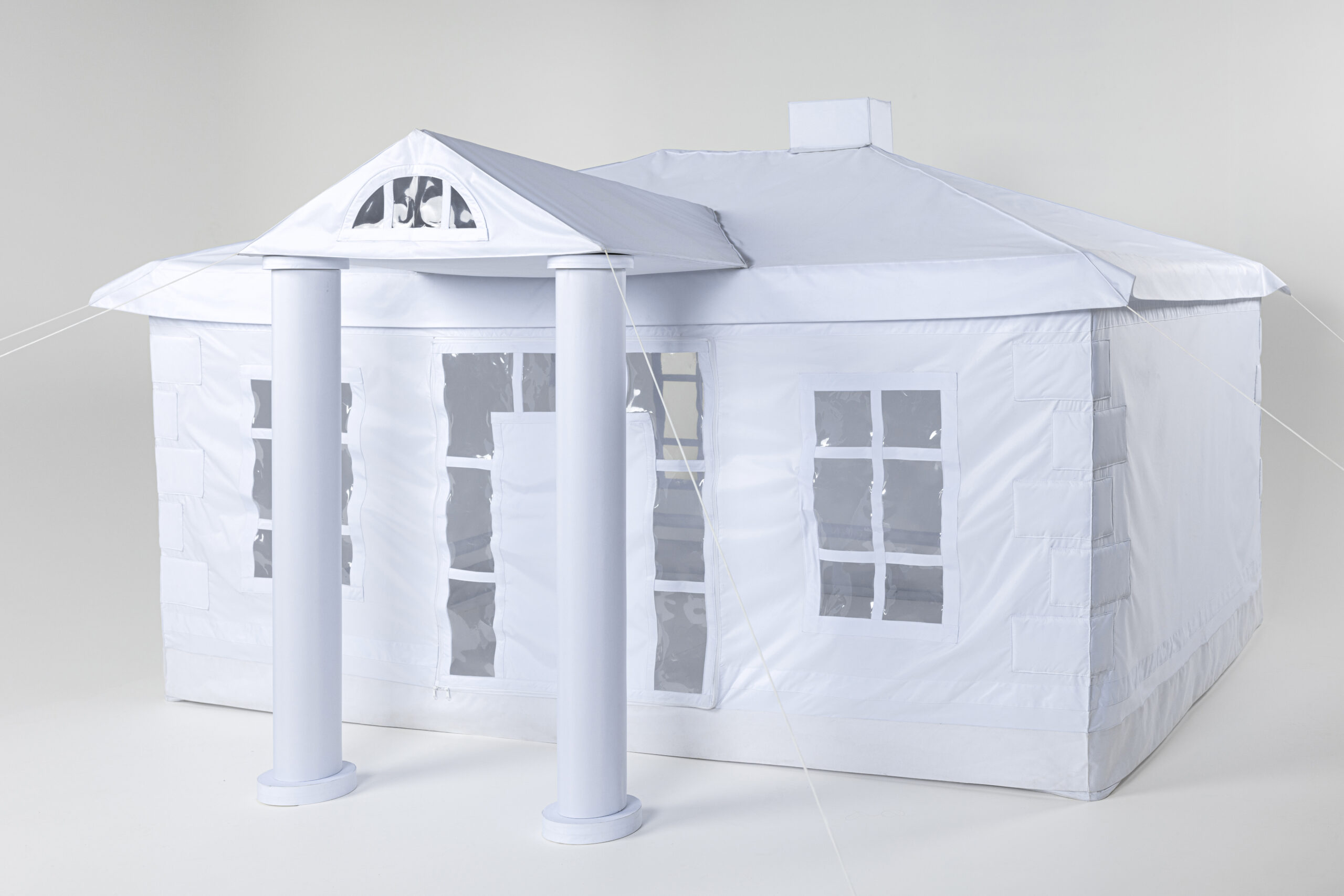
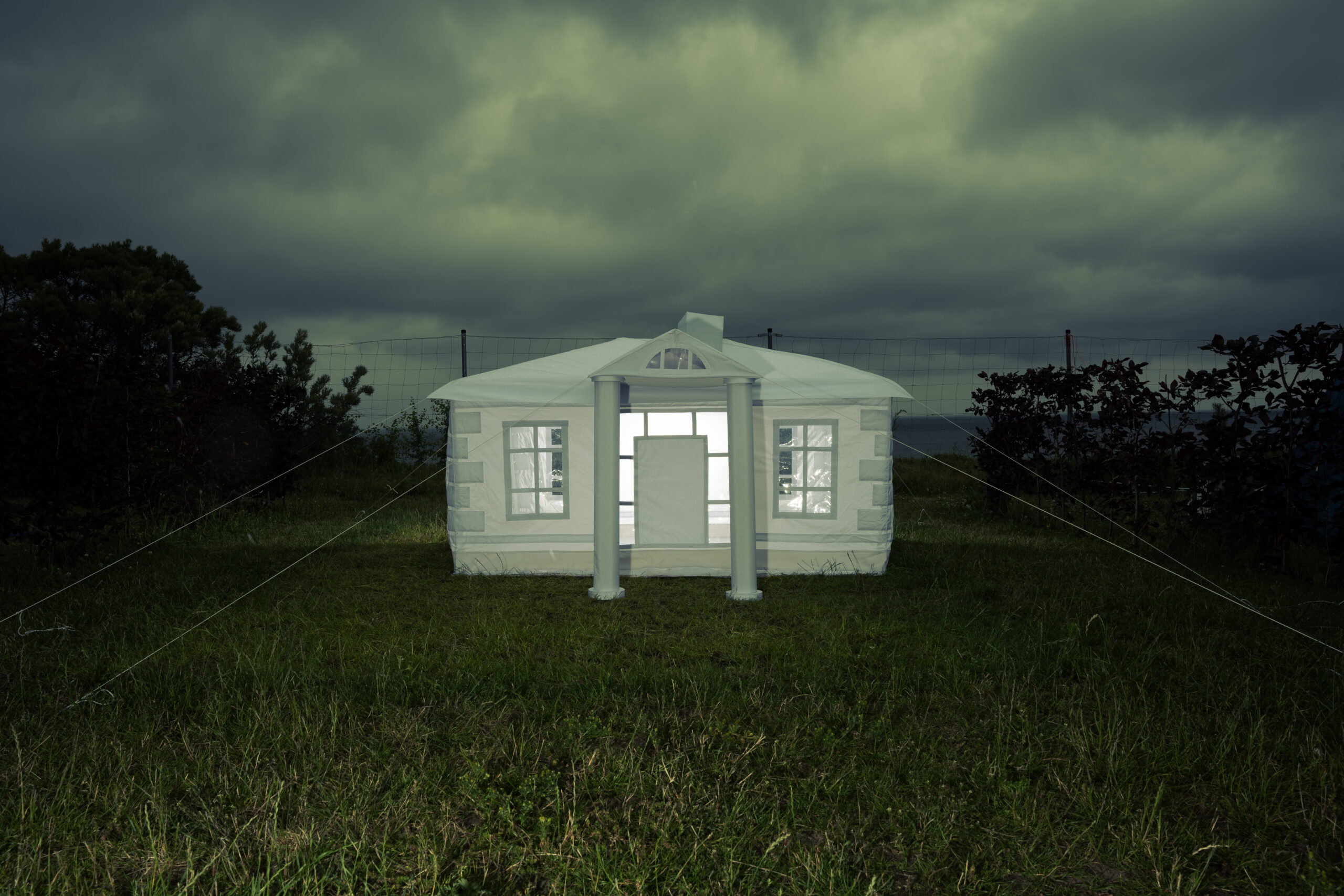
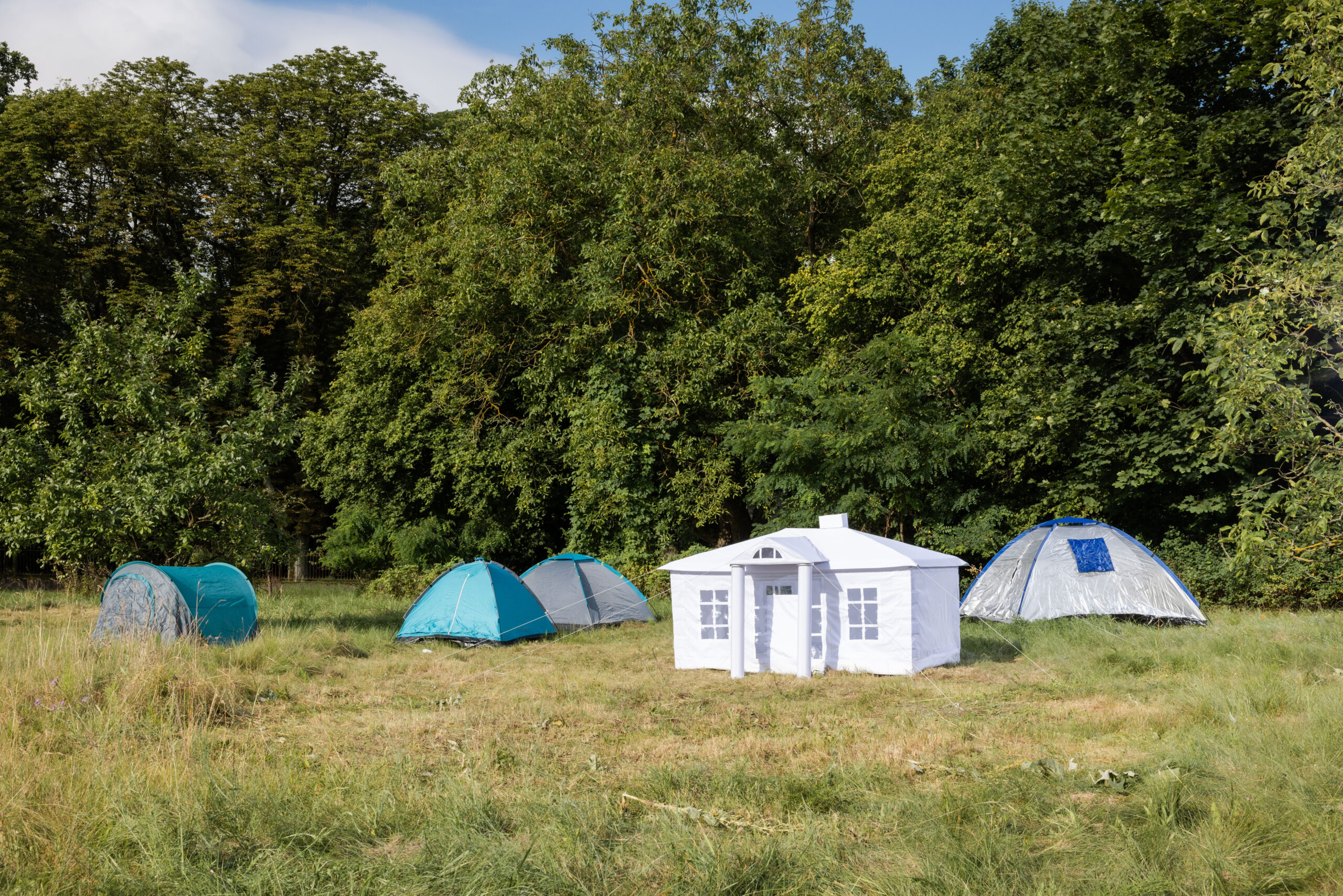
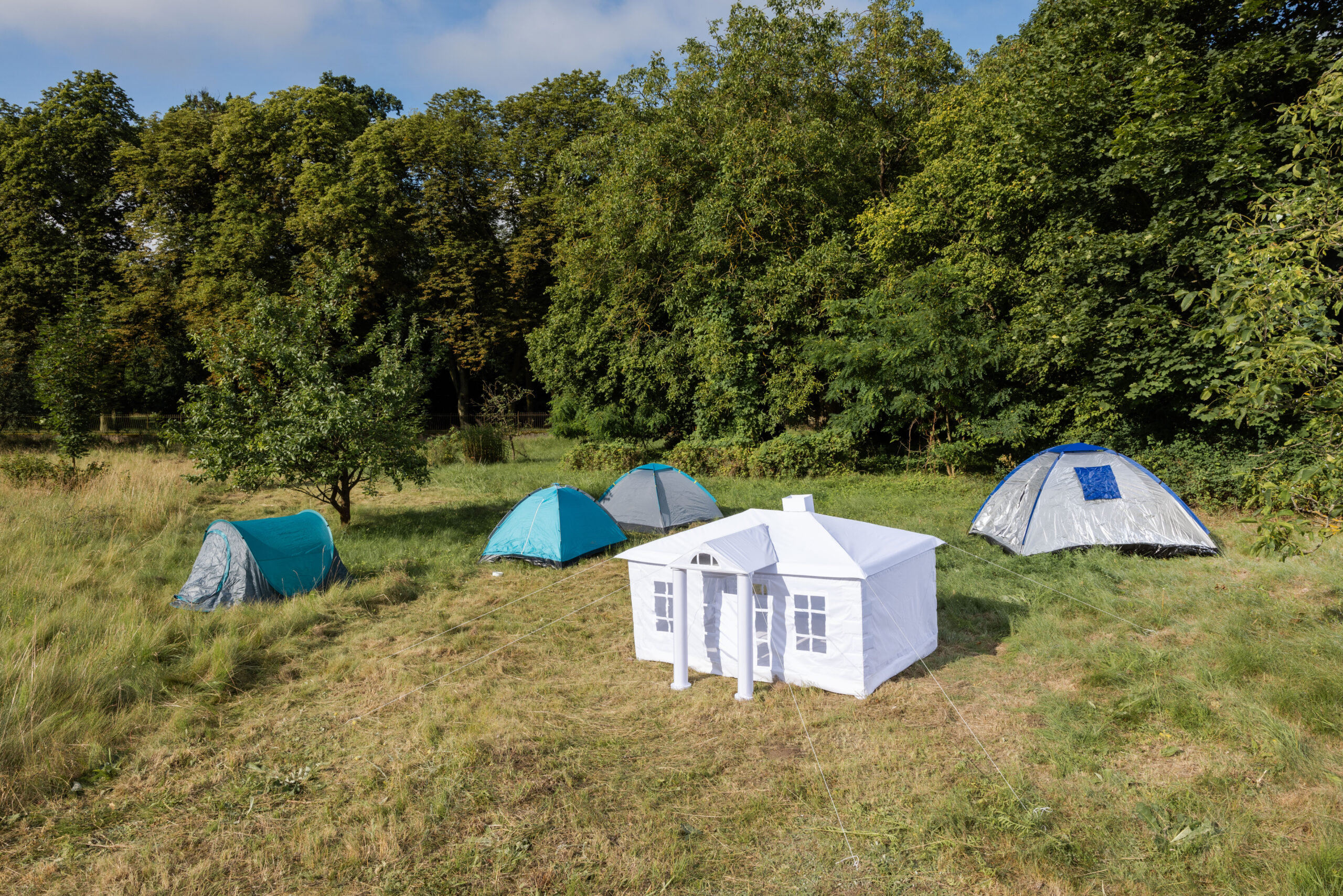
The Polish Tent (2023)
Year: 2023
Presented at the group exhibition Granice sztuki. 30. lat Paszportów Polityki [The Limits of Art: 30 Years of the Polityka Passports], State Art Gallery in Sopot.
Dates: January–April 2023.
Catalogue: Granice sztuki. 30. lat Paszportów Polityki.
All That Is Solid Melts into Air (2025)
Year: 2025
Presented at the group exhibition Gallery in the Thickets and Shrubs
Venue: Campus of the Jagiellonian University in Kraków
Dates: 30-31 May 2025
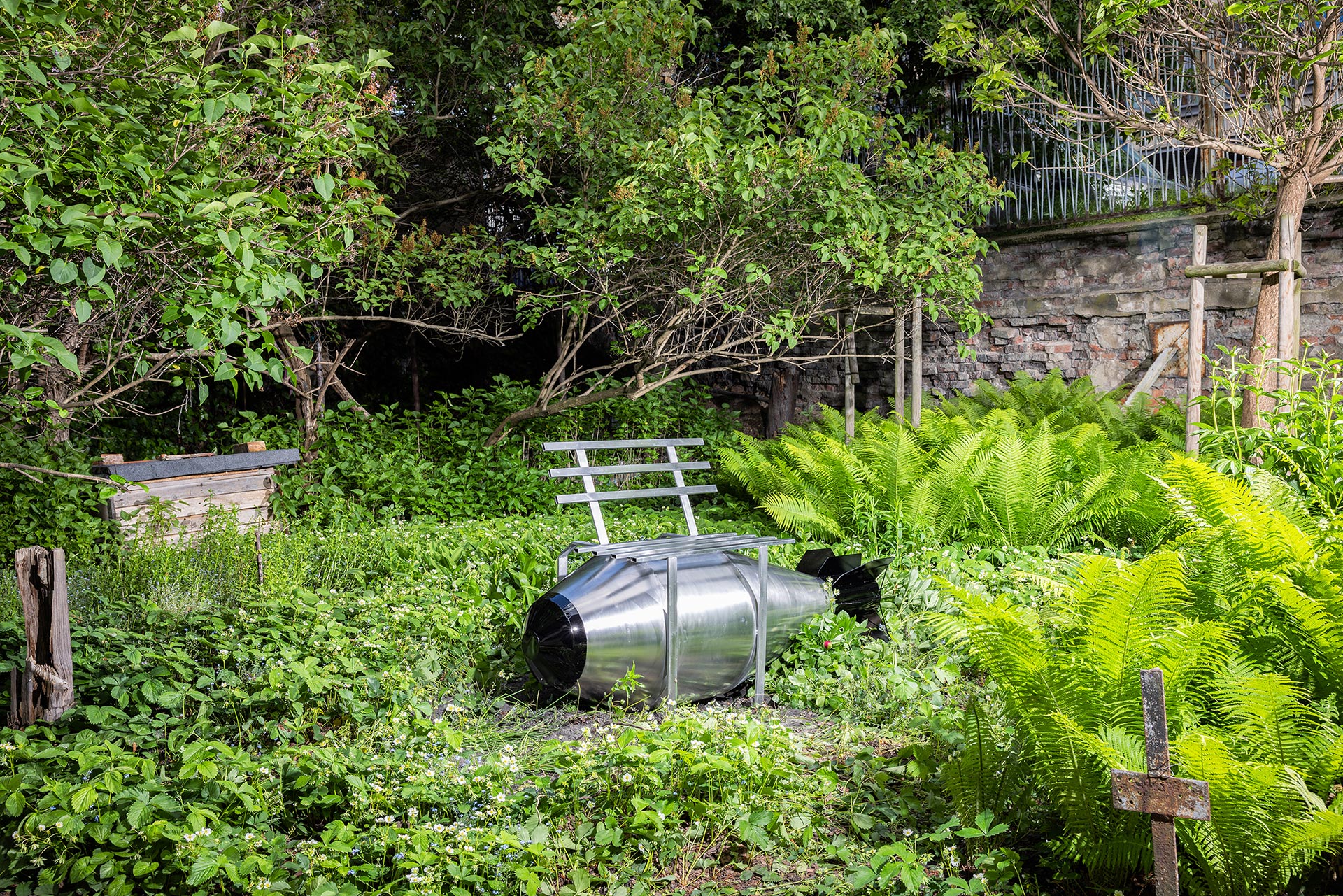
The artistic intervention implemented in 2025 centres on an object: a full-scale replica of a bomb, transformed into a park bench. Entirely constructed from metal, the piece’s conceptual core lies not only in its material form but crucially in the context of its presentation. It was exhibited as part of the collective exhibition Gallery in the Thickets and Shrubs, staged in derelict areas adjacent to the Jagiellonian University in Kraków, as well as in an unutilized urban space in the centre of Poznań.
The location of the installation was deliberately chosen. The object entered into a dialogue with spaces socially perceived as marginal—overlooked by tourists and frequently occupied by individuals experiencing homelessness. These environments foster alternative forms of use and repurposing, in which objects are adapted by lower-class individuals through non-standard practices aimed at daily survival. This form of recycling or bricolage—assigning new functions to existing materials—positions the bench/bomb hybrid within a sphere of potentiality: as an object found, altered, and re-employed.
The title, All That Is Solid Melts into Air, serves as a metaphor for the contemporary geopolitical situation. Drawing on Immanuel Wallerstein’s world-systems theory, among others, the work may be interpreted as a commentary on the disintegration of the global order historically grounded in capital accumulation. Today’s social tensions are reflected not only in ongoing military conflicts but also in the growing support for conservative-populist movements, the resurgence of fascist tendencies, and the systemic incapacity to implement effective responses to ecological disasters—disasters that, in the short term, often conflict with the immediate needs of the most socioeconomically vulnerable. The work also engages with populist features of the urban landscape—such as commemorative benches dedicated to significant figures or events—thereby facilitating its social assimilation. Simultaneously, by resisting a fixed artistic classification, the project avoids the reification typical of practices absorbed into institutional and market-driven mechanisms. Its lack of alignment with mass culture, in turn, shields it from the superficiality and literalism that often characterize populist interventions in public space.



Configurations (2019)